
 English
  Japanese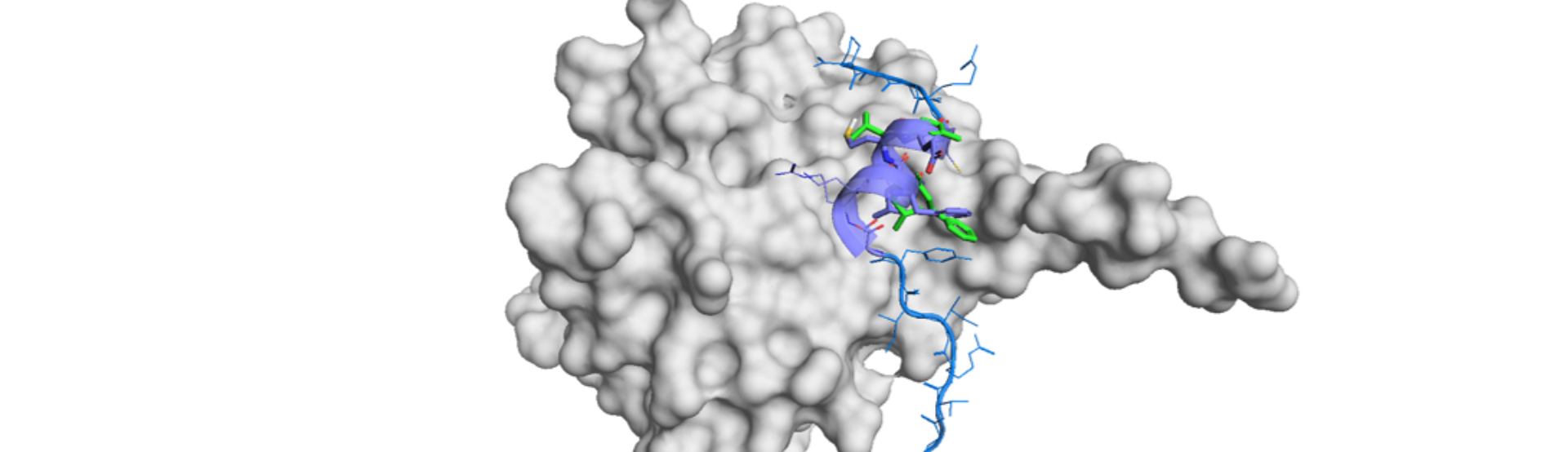


Published on: May 28, 2026
Prostate-specific membrane antigen (PSMA) is a promising target to achieve a selective delivery to prostate cancer.1) Even though its significance in cancer pharmacology is scarce, radiopharmaceuticals have been taken it as the target for the therapy and diagnostic purposes. PSMA targeting is the legendary story of radiopharmaceutical discovery and development and it is of high values to take a close look at for the better understanding of radiotherapy.
In PSMA, glutamate carboxypeptidase II (GCPII), targeted radiotherapeutics development, three radionuclides, 177Lu, 225Ac and 213Bi, have been playing invaluable roles. 68Ga and 18F have also contributed for the diagnosis purpose in PET. We would like to focus here on the therapeutic side of PSMA-targeted radiotherapeutics.
The concept of radiotherapy for prostate cancer is rather simple. A radiolabeled PSMA binder is supposed to be targeted to the tumor cells derived from PSMA-related prostate cancer. The decay of radionuclide emits a high energy particle (a or b-) or radiation (g) that inflict DNA strand and drive the tumor cells to death.
177Lu, 225Ac and 213Bi have been used because of their reliable properties in terms of the y sequence and the resulting emission of locally targetable a and/or b- particles.
177Lu is a b- emitter and allows relatively local invasion. The energy of the b- particle depends on the decay pathway to177Hf and the distribution is analyzed to be 497 KeV (78.6 %), 384 keV (9.1 %) and 176 keV (12.2 %). The decays also involve low-energy g photons with energies of 113 keV (6.6 %) and 208 keV (11 %).2) 177Lu’s decay emits low-penetrative particle with mean distance of 0.67mm.3) The cellular uptake of 177Lu-based radiopharmaceuticals allows cancer lesion-selective damages on the DNAs in the for single or double strand breaks. The half-life 6.6 days.4)
225Ac undergoes a decay to emit a particles with the energy of 5.8 to 8.4 MeV.5),6) The a ray of 225Ac travels within the distance of 0.085mm in tissues. It means 225Ac selectively shows strong invasive effects on the cells just around the nuclide considering the general radius of a cancel cell is 0.01mm or a bit more. 255Ac has a half-life of 9.9 days.
213Bi is a mixed a and b- emitter with a half-life of only 45.6 minutes.7) In spite of the difficulty in the supply of the short-lived 213Bi, there is a report of clinical application to a patient of prostate cancer.8)
It is worth considering that 213Bi are present in the decay cascade of 225Ac. The sequence of decays from 225Ac to the stable nuclide, 205Tl, is below.
225Ac-a-221Fr-a-217At-a-213Bi-b--213Po-a- or -a-209Tl-b--209Pb-b--209Bi-a-205Tl
The half-lives of the nuclides except for 209Bi (2x10¹⁹ years) after the a decay of 225Ac are within hours to micro seconds, and hence 225Ac actually emits 4 a particles and 2 b- particles.
177Lu has been the major nuclide in PSMA-targeted radiopharmaceutical therapies.9) However, application of 225Ac in the same scheme is an intense focus of area because of its ability to emit multiple a particles that allows more local irradiation and hence expected less adverse effects on non-cancer cells.10)
The approaches for radiopharmaceuticals developments are different from the other drug discovery and developments. There is orthogonality in target identification and approach for drug improvement, which we did not discuss here deeply. It is worth keep eyes on radiopharmaceuticals in cancer therapy to see the possibility of opening up their opportunity.
- https://doi.org/10.3390/bioengineering11070714
- https://doi.org/10.1007%2Fs13139-014-0315-z
- https://www.fda.gov/
- https://doi.org/10.1016/j.apradiso.2011.04.021
- https://doi.org/10.1007/s00259-014-2978-1
- https://doi.org/10.2967%2Fjnumed.123.265763
- https://doi.org/10.1016/j.semcancer.2015.07.003
- https://doi.org/10.1158/1541-7786.mcr-23-0075
- https://doi.org/10.7150/thno.93249
- https://doi.org/10.21037/atm-23-1842